
A recent study found that fumonisins were detected in all poultry feed samples analyzed. The median concentration was 1,750 ppb (1). This is a big problem for poultry health and farm profits.
If you raise poultry, knowing about mycotoxins is key. They can harm your birds’ health and productivity. So, it’s important to have good mycotoxin management plans.
Key Takeaways
- Understanding mycotoxin contamination is vital for poultry health.
- Fumonisins are often found in poultry feed.
- Good mycotoxin management keeps poultry productive.
- Mycotoxin problems can hurt farm profits a lot.
- Testing and monitoring regularly can reduce mycotoxin risks.
Understanding Mycotoxins: The Basics
To tackle poultry health issues, we must first grasp what mycotoxins are. Mycotoxins are harmful substances made by certain fungi. These include Aspergillus, Fusarium, and Penicillium species. These fungi can spoil grains and other feed ingredients.
What Are Mycotoxins?
Mycotoxins are harmful compounds that can harm poultry health. They can slow down growth, reduce egg production, and affect overall health. Their effects can be hard to spot without testing.
How Are Mycotoxins Produced?
Mycotoxins form when feed ingredients are grown, harvested, or stored. Temperature, humidity, and moisture levels play a role in fungal growth and mycotoxin production. For example, high moisture and warm temperatures help Fusarium species grow, producing Fusarium mycotoxins.
| Factor | Effect on Mycotoxin Production |
|---|---|
| High Moisture | Increases fungal growth and mycotoxin production |
| Warm Temperature | Fosters optimal conditions for fungal growth |
| Poor Storage | Can lead to increased contamination |
Why Are They a Concern in Poultry Feed?
Mycotoxins in poultry feed are a big worry. They can slow down growth, lower egg production, and make birds more prone to diseases. Also, mycotoxin contamination can cost poultry farmers a lot of money due to health and productivity losses.
Common Types of Mycotoxins in Poultry Feed
It’s key to know about mycotoxins in poultry feed to keep birds healthy and productive. Mycotoxins are harmful substances made by fungi. They can spoil feed ingredients, harming poultry.
Aflatoxins
Aflatoxins are a big worry for poultry health. They can cause liver damage and are linked to cancer. These toxins come from Aspergillus fungus, which grows on feed under the right conditions.
Fusarium Mycotoxins
Fusarium mycotoxins, like fumonisins and trichothecenes, are also harmful. They can lead to health issues such as reproductive problems and weakened immune systems. Fusarium fungi are common in soil and can infect crops, causing contamination.
Ochratoxins
Ochratoxins are made by Aspergillus and Penicillium fungi. They harm the kidneys of poultry. These toxins can be in many feed ingredients, making them a big concern for poultry farmers.
Checking for mycotoxin risk is vital for feed safety for poultry. Knowing about these toxins helps farmers protect their birds’ health and productivity.
Sources of Mycotoxins in Poultry Feed
To lower mycotoxin risks in poultry feed, knowing where they come from is key. Mycotoxins can get into feed through many ways. This makes it hard to keep them out.
Contaminated Grains and Ingredients
Grains like corn, wheat, and barley are often in poultry feed. They can get contaminated with mycotoxins. Poor agricultural practices and unfavorable weather conditions help fungi grow, making mycotoxins.
Environmental Conditions
Weather like high temperatures, drought, and too much moisture can cause fungi to grow. Monitoring weather conditions and using resistant crop varieties can help fight these issues.
Storage Practices
Keeping feed and grains dry is key to avoiding mycotoxin contamination. It’s important to keep dry conditions and control storage temperature to stop fungi and mycotoxins.
By tackling these sources of mycotoxins, poultry farmers can greatly reduce them in feed. This improves poultry feed quality control.
How Mycotoxins Affect Poultry Health
Mycotoxins have many effects on poultry health. They can slow growth, affect reproductive performance, and weaken the immune system. As a poultry producer, it’s key to know these impacts. This knowledge helps in using mycotoxin prevention strategies to protect your birds.
Impact on Growth and Performance
Mycotoxins can lower growth rates and make feed less efficient in poultry. This hurts the health of the birds and leads to financial losses. For example, aflatoxins can block nutrient absorption, causing stunted growth and less weight gain.
Reproductive Effects
Mycotoxins also harm poultry reproduction. They can lower egg production, reduce hatchability, and cause other reproductive problems. Some mycotoxins can mess with reproductive hormones, leading to irregular egg laying and fertility issues.
Immune System Suppression
Also, mycotoxins can weaken the immune system of poultry. This makes them more likely to get sick. Effective mycotoxin prevention strategies are vital to reduce these risks. They help keep the flock healthy and thriving.
Understanding how mycotoxins affect poultry health is important. Producers can then take steps to lessen these effects. This includes using good farming practices, proper storage, and mycotoxin binders. These actions are part of a strong poultry health management plan.
Testing for Mycotoxins in Feed
Testing for mycotoxins is key to keeping poultry healthy and productive. As a poultry producer, I know how vital it is to keep feed safe from mycotoxins.
Importance of Regular Testing
Regular testing for mycotoxins is essential. It helps spot contaminated feed early, so we can act fast. This is critical to stop mycotoxins from harming poultry health.
Early detection through regular testing can significantly reduce the risk of mycotoxin exposure. It lets us remove contaminated feed and protect the flock.
Common Testing Methods
There are several ways to test for mycotoxins in feed. These include ELISA, HPLC, and LC-MS/MS.
Each method has its own strengths and weaknesses. ELISA is quick and easy, but not as sensitive. HPLC and LC-MS/MS are more precise but need special equipment.
| Testing Method | Advantages | Limitations |
|---|---|---|
| ELISA | Rapid, simple, cost-effective | Limited sensitivity, possible false positives |
| HPLC | High sensitivity, accurate quantification | Needs special equipment, more complex |
| LC-MS/MS | High specificity, detects many mycotoxins | Expensive, complex equipment needed |
Interpreting Test Results
Understanding test results is vital for making feed safety decisions. Producers need to know the safe levels of mycotoxins in feed.
It’s not just about detecting mycotoxins, but also understanding the levels and types present to take appropriate action.
By testing regularly and knowing how to read the results, poultry producers can greatly improve feed safety. This helps reduce the risks from mycotoxin contamination.
Regulations and Guidelines on Mycotoxins
Mycotoxins in poultry feed are managed by strict rules. These rules change a lot from country to country. In the United States, the FDA and USDA are key in setting these rules.
National and International Standards
Standards for mycotoxins are vital for safe poultry feed. The FDA has action levels for mycotoxins like aflatoxins. These are guidelines for the industry. Internationally, the Codex Alimentarius Commission sets standards that countries can follow.
Key aspects of these standards include:
- Maximum levels for mycotoxins in feed ingredients and complete feeds.
- Rules for sampling and analysis to check compliance.
- Advice on farming and storage to reduce mycotoxin risk.
Role of the FDA and USDA
The FDA and USDA are key in controlling mycotoxins in poultry feed. The FDA has action levels for mycotoxins. The USDA monitors and controls mycotoxin contamination in farm products.
“The FDA’s guidance on mycotoxins helps ensure that feed manufacturers and poultry producers are aware of the risks and take appropriate steps to minimize exposure.”
Compliance for Poultry Producers
For poultry producers, following mycotoxin rules is a must. It’s important for the health and welfare of their birds. Producers need to know the latest rules, follow good practices, and test their feed often.
Strategies for compliance include:
- Always check and follow FDA action levels and USDA guidelines.
- Use strong feed sourcing and storage methods.
- Do regular mycotoxin tests.
By following these rules, poultry producers can lower mycotoxin risks. This ensures a healthier and more productive flock.
Strategies to Minimize Mycotoxin Risks
To lower mycotoxin risks, focus on good farming practices, keep feed storage conditions right, and use mycotoxin binders. These steps help poultry farmers cut down on feed contamination risks.
Good Agricultural Practices
Good farming habits are key to avoiding mycotoxins. This includes rotating crops, drying grains properly, and avoiding moisture during harvest. These steps help crops stay safe from fungi that make mycotoxins.
Crop Rotation and Soil Health
Rotating crops keeps soil healthy and lowers fungal risks. It’s important to mix crops that are less likely to get mycotoxins with those that are more at risk.
Effective Storage Solutions
Storing grains and feed right is vital to stop mycotoxin contamination. Storage areas should be dry, well-ventilated, and pest-free. Always check stored grains for mold or pests.
Storage Conditions
- Keep it dry to stop mold.
- Ensure good air flow to avoid moisture buildup.
- Keep pests out of storage areas.
A study on managing mycotoxins found that “Proper storage and handling of grains can greatly lower mycotoxin contamination risks.”
“Proper grain storage is a critical part of managing mycotoxin risks.”
Use of Mycotoxin Binders
Mycotoxin binders are added to poultry feed to fight mycotoxins. They bind to mycotoxins in the gut, stopping them from getting into the blood.
| Type of Mycotoxin Binder | Mechanism of Action | Effectiveness |
|---|---|---|
| Clay-based Binders | Adsorb mycotoxins, reducing their absorption | High |
| Yeast-derived Binders | Bind to mycotoxins, preventing their absorption | Moderate to High |
| Synthetic Binders | Chemically bind to mycotoxins | Variable |
By using good farming, effective storage, and mycotoxin binders, poultry producers can greatly reduce mycotoxin risks. This ensures the quality and safety of poultry feed.
Symptoms of Mycotoxin Exposure in Poultry
Mycotoxins can cause health problems in poultry, from changes in behavior to serious physical signs. It’s important to spot these symptoms early. This helps in keeping poultry healthy and safe from mycotoxins.
Behavioral Signs
Poultry with mycotoxin exposure might act differently. They could eat less and move less. These signs are small, so farmers need to watch their birds closely. Less eating can hurt their health and work.
Physical Symptoms
Physical signs of mycotoxin exposure vary. They include diarrhea, skin problems, and changes in egg laying. For example, aflatoxins can harm the liver and lower egg production. This hurts poultry health and the farm’s profits.
Diagnostic Challenges
It’s hard to tell if mycotoxins are the problem because symptoms are not clear. To figure it out, you need to test the feed and watch the birds for illness. This means checking the feed for toxins and looking for sickness in the flock.
Knowing the signs of mycotoxin exposure helps farmers protect their birds. By using mycotoxin prevention strategies, they can keep their flocks healthy and productive.
Economic Impacts of Mycotoxins in Poultry
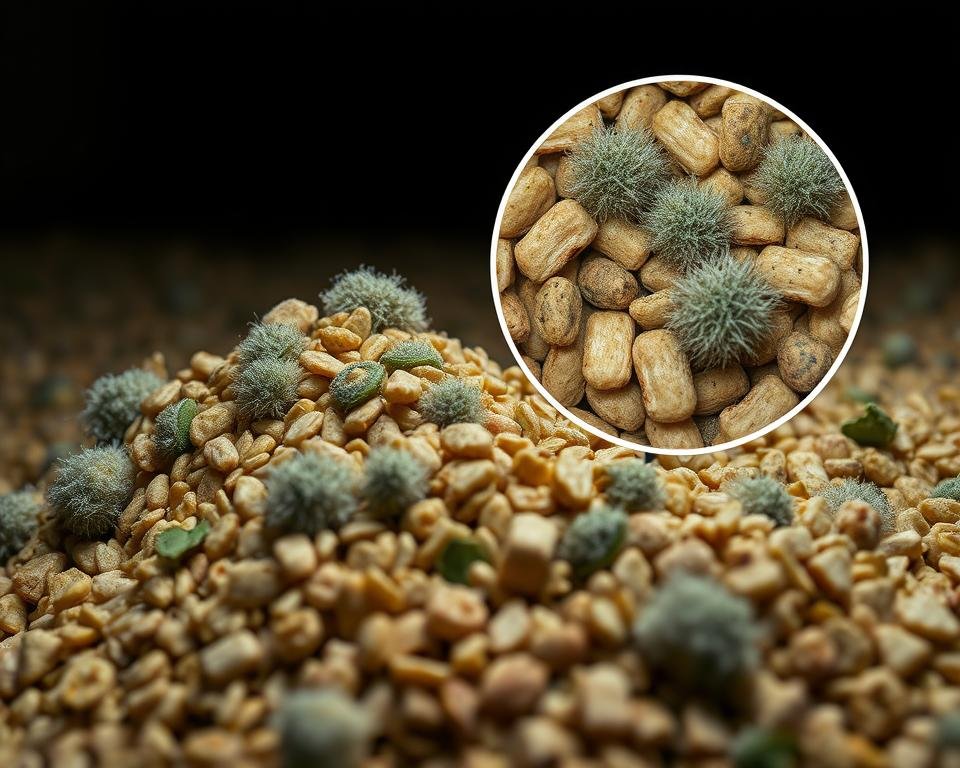
Mycotoxins in poultry feed cause big economic problems. They harm bird health, lower productivity, and cut into profits. Mycotoxins in feed can lead to higher vet bills, less productivity, and even death.
Costs Related to Health and Mortality
Mycotoxins weaken poultry’s immune system. This makes birds more likely to get sick and need vet care. Mycotoxin exposure can also raise mortality rates.
- Higher vet bills for treating mycotoxin-related health issues.
- More deaths, leading to direct losses in bird numbers and revenue.
- Costs for disposing of dead birds and keeping the farm clean.
Impact on Feed Efficiency
Mycotoxins hurt how well poultry uses feed. This leads to slower growth and more feed needed. This inefficiency raises production costs.
Feed efficiency is key for poultry profits. Mycotoxins can lower feed’s nutritional value or make it harder for birds to use nutrients. This means:
- More feed costs to get the same growth.
- Delays in reaching market weight, affecting cash flow and planning.
Long-term Financial Consequences
The long-term effects of mycotoxins are severe. They harm poultry health and productivity now and affect the farm’s future.
Long-term impacts include:
- Damage to reputation if mycotoxin issues are made public, affecting market share and trust.
- Higher costs for managing and monitoring mycotoxins.
- Costs for meeting regulatory requirements, like testing and reporting.
Understanding these impacts helps poultry producers see why they should invest in mycotoxin management. This improves feed safety and makes their operations more sustainable.
Consumer Awareness and Mycotoxins
It’s important to talk about mycotoxins to make poultry products healthier. As the poultry industry grows, knowing about mycotoxins in feed is key for everyone. This includes consumers, producers, and regulators.
Educating Poultry Producers
Teaching poultry producers about mycotoxin management is vital. They need to learn about good agricultural practices. This helps reduce mycotoxin risks in feed.
Regular training and updates on new research and technologies are helpful. This keeps producers informed on how to handle mycotoxins.
Research and Public Health Concerns
Research on mycotoxins and public health is essential. It helps us understand the risks of contaminated poultry. Even though poultry has a short lifespan, there are health risks from eating contaminated products.
It’s important to invest in research for new ways to reduce mycotoxins in feed. This ensures the food supply is safe for the long term.
Transparency in the Poultry Industry
Transparency in the poultry industry is key to gaining consumer trust. By sharing information on mycotoxin management, producers show they care about safety. This makes poultry products safer and healthier.
Being open helps everyone in the industry. It leads to a safer and more reliable food supply chain for all.
Future Research Directions on Mycotoxins
Mycotoxin research is key to improving poultry feed quality control and mycotoxin risk assessment. We need to explore new ways to reduce mycotoxin risks in poultry feed.
Ongoing Studies and Innovations
New studies show the need for better mycotoxin detection methods. Innovations like rapid testing kits and advanced analytical techniques are being developed. For example, a recent study in a study highlights the importance of innovation for poultry feed safety.
Biotechnology is also promising. It can help develop crops resistant to fungal infections, reducing mycotoxin contamination. This approach improves feed quality and supports sustainable poultry production.
Role of Biotechnology
Biotechnology is vital for new mycotoxin mitigation strategies. Genetic engineering can create crops resistant to fungal infections, lowering mycotoxin risks. It also helps in making mycotoxin binders more effective in poultry.
Preventive Strategies Development
Creating preventive strategies is essential to reduce mycotoxin risks in poultry feed. This includes good agricultural practices, effective storage, and mycotoxin binders. A multi-faceted approach can greatly lessen mycotoxin impacts on poultry operations.
Research into the economic impacts of mycotoxins is also ongoing. It aims to show the value of these preventive strategies to the poultry industry.
Conclusion: Addressing Mycotoxin Challenges in Poultry Feed
Managing mycotoxins in poultry feed is a complex task. It needs a multi-step approach. This includes understanding mycotoxin risks and using effective prevention strategies. By doing this, poultry producers can greatly improve poultry health and lower economic losses from mycotoxin contamination.
Key Takeaways and Future Directions
The best way to fight mycotoxin risks is to use good farming practices. Effective storage solutions and mycotoxin binders are also key. Regular testing and keeping up with new research and rules are very important too.
Proactive Steps for Poultry Producers
I urge poultry producers to take action to protect their flocks. Investing in mycotoxin prevention strategies is a smart move. It keeps the poultry healthy and supports a sustainable poultry industry.
Towards a Healthier Poultry Industry
Working together, we can make the poultry industry healthier and stronger. This means constant learning, research, and using new ways to prevent mycotoxins. It’s all about putting poultry health first.